Article
Color temperature from day to night
Desk lighting is often treated as on or off. Your eyes experience something finer: color temperature—how cool or warm the light looks—plus brightness. Daytime work usually wants clearer, cooler light. Evening work usually wants less harsh contrast and warmer tones so the room does not feel like a midday warehouse.
This guide is a practical day-to-night lighting plan for remote desks. It is educational, not medical advice about sleep, hormones, or eye disease.
At a glance
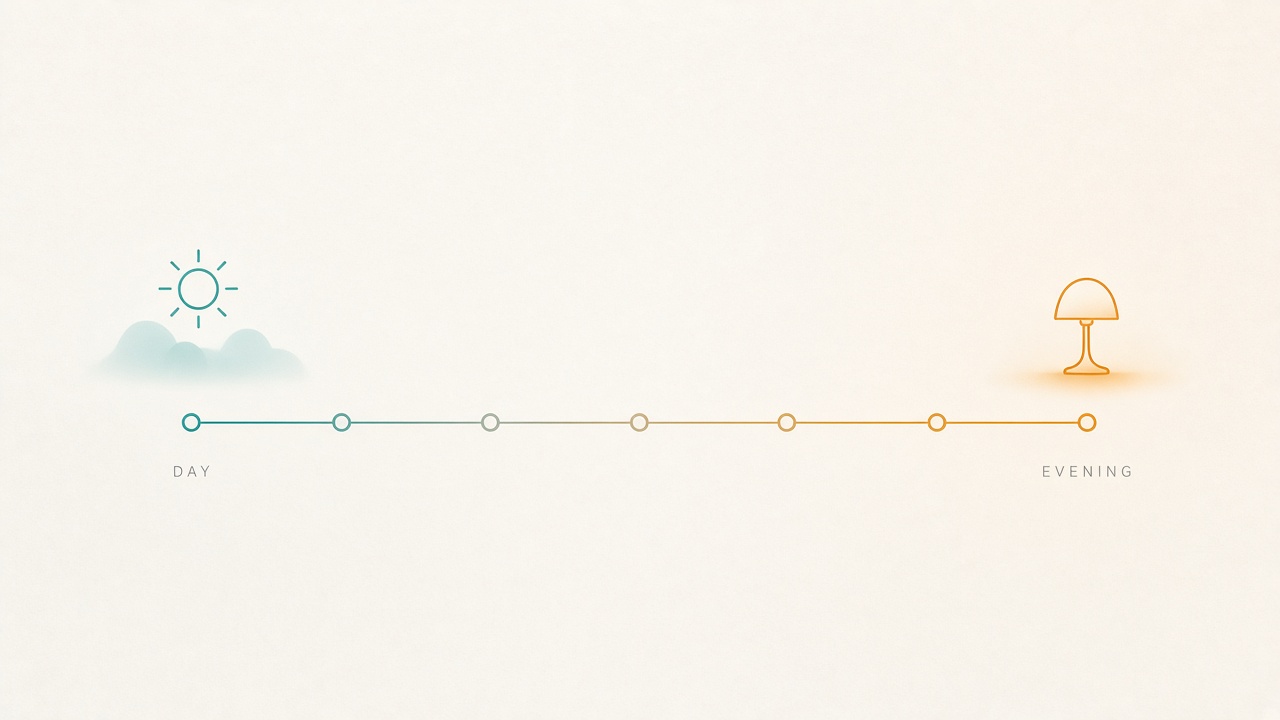
Cooler light by day, warmer task light toward evening.
Quick definitions without showroom jargon
Cool light, often marketed around 4000–6500K, appears whiter or bluer and often feels more alert for detail work. Neutral light, often around 3500–4000K, balances mixed tasks. Warm light, often around 2700–3000K, appears amber and often feels calmer at night.
Numbers vary by bulb marketing. Trust your eyes. If evening light feels like a hospital hallway, it is probably too cool and too bright for the hour.
The problem with one static lamp setting
A single bright cool lamp all day creates two failure modes. Daytime murk appears when the lamp is too weak for daylight needs or aimed wrong. Night glare appears when the same setting stays blasting while the room goes dark around a glowing monitor.
The fix is a ladder, not a personality makeover. Match light to the ambient day phase.
Day phase: clarity without glare
From morning to mid-afternoon, the goals are readable paper, comfortable contrast with the screen, and less squinting. Open curtains when privacy allows. Use a cooler or neutral task lamp for paperwork. Keep the lamp off the monitor’s reflective axis; side placement usually beats aiming at the screen. Match screen brightness roughly to the room so the display is neither a light box in a cave nor a gray slate in a bright room.
If you can read a printed page without leaning in, daytime task light is in range. Overcast days fool people into keeping night settings. Bump brightness and consider a cooler tone for hours you still treat as day, then warm later on schedule rather than by mood alone.
Evening phase: warmer, dimmer, still readable
When daylight fades, change settings in order. Lower screen brightness before you crank lamps harder. Shift lamps warmer, often into a 2700–3000K range as a common evening target. Reduce overhead glare and prefer a shaded task lamp over a bare bulb behind you on camera.
You still need enough light to move safely and read short paper notes. A candle-like mode that forces you to peer at dark keys is strain, not calm. A simple evening recipe uses a warm desk lamp at medium output aimed at the desk surface or a wall bounce, a warmer display profile after a set clock time, and optional soft bias lighting behind the monitor if it reduces harsh edge contrast. If faces look orange on camera, add a small neutral fill for calls, then return to warm after.
Build a two- or three-step schedule
Pick clock times that match your latitude and work hours. From start until mid-afternoon, use neutral or cool task light as needed and match the screen to the room. Through late afternoon, stay neutral and reduce output if sun is strong, while lowering the screen slightly if the room dims. After early evening, switch to warm task light, softer overhead light, a warmer screen profile, and lower brightness.
Automations help if you have smart bulbs. A manual two-position habit with a cool bulb by day and a warm bulb by night also works without an app.
Keep monitor and lamp in agreement
Color temperature fails when the screen and room disagree violently. A bright cool screen in a warm dim room feels aggressive. A dim warm screen in a bright cool room feels muddy. Adjust both sides. Many people only tweak software night modes and leave a cool LED panel blasting the desk.
Also watch specular glare. A glossy monitor will show a warm lamp as a fuzzy highlight. Move the lamp, raise the screen slightly, or change angles to reduce reflections.
Handle camera calls across day and night
Video adds a constraint: your face needs readable light. By day, face the window or place a lamp in front of you, not behind. By night, keep a dedicated front-facing lamp at neutral-to-warm for calls. After the call, return to the calmer evening desk setting.
Looking clear on camera and feeling calm while drafting are related but not identical goals. Switch intentionally.
Common mistakes and travel edge cases
Using only overhead cool lights at night keeps the room harsh. Putting a lamp directly behind a monitor aimed at your eyes creates glare. Running maximum orange night-shift settings while editing color-critical work distorts judgment; keep a neutral profile during that task, then warm the room when it ends. Phone screens at night can undo a careful desk plan if they become the brightest object in the room.
Hotel lamps are often a single warm bulb in the wrong place. Pack a compact clip lamp with a known bulb temperature, or rely more on screen brightness matching and a front-facing phone light for short calls. When you return home, deliberately restore your day/night ladder so travel does not train a permanent whatever-the-room-gave-me habit.
Checklist
- Daytime curtains plus neutral or cool task light available
- Lamp placed to avoid monitor glare
- Screen brightness matched to the room across the day
- Evening warmer lamp setting ready by bulb or scene
- Evening screen warmer and dimmer after a set time
- Call-specific front light available without wrecking night calm
- Overhead glare reduced after dark
- Two- or three-step schedule written and tested for a week
FAQ
Do I need smart bulbs?
No. Two bulbs and a habit beat unused automation. Smart scenes are convenience, not a requirement.
Is warmer light better for sleep?
Sleep biology is personal and beyond this article. Many people prefer warmer, dimmer rooms at night. If you have sleep concerns, talk with a qualified clinician.
What temperature works for detailed paper work at night?
Stay readable first. Slightly warmer than daytime is fine; do not dim below comfort. Accuracy beats atmosphere.
My partner hates the color shift. What then?
Use localized task lighting at your desk and keep shared rooms on a compromise neutral. Desk light can change without redoing the whole apartment.
Should the keyboard backlight replace a lamp?
No. Backlights help find keys; they do not light your face, paper, or room edges.
Next reading
Change light with the clock. Your desk should not stay stuck at noon after dark.