Article
Work blocks when kids are home

Remote work with kids at home is not a quieter version of office life. It is a different operating system. The mistake is protecting ninety-minute deep-work blocks that collapse the moment someone needs a snack, a password, or emotional first aid. The fix is not willpower. It is designing interrupt-tolerant blocks that still move real work forward. This guide is practical scheduling advice, not parental advice and not medical advice.
At a glance
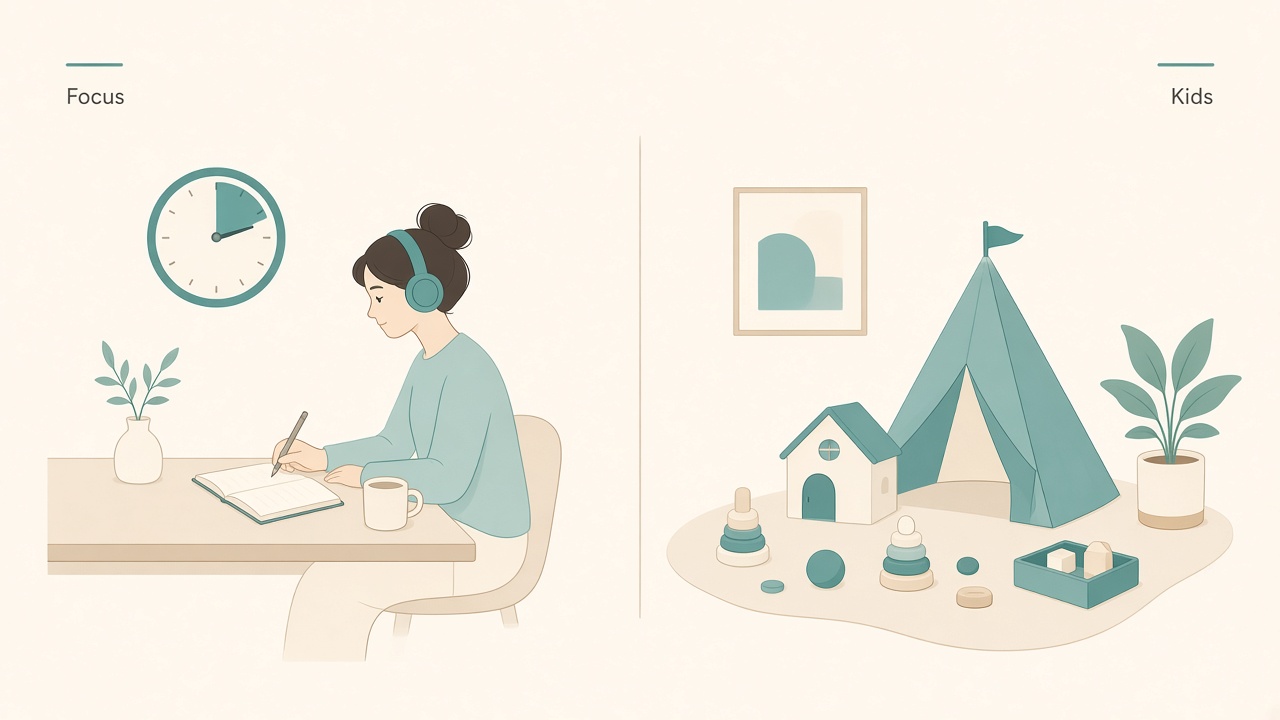
Visible timers and clear focus windows for mixed days.
Stop measuring focus the office way
Office focus culture rewards long unbroken stretches. Home focus with kids rewards recoverable progress: work that can pause cleanly, resume quickly, and still produce an artifact by day’s end.
Ask three questions before you plan the week. Which tasks need true silence for twenty minutes or more? Which tasks can absorb a five-minute interruption without restarting from zero? Which tasks are better done as voice notes, triage, or admin while kids are nearby?
Most people overload the first category and underuse the second. That imbalance is why Mondays feel heroic and Wednesdays feel defeated.
Build three kinds of blocks
Hard-focus blocks should stay short and rare: about 25–45 minutes. Place them where the household already has natural quiet—nap windows, school hours, partner coverage, or early mornings. Protect them with a visible signal and a pre-agreed “interrupt only if…” rule. Keep the work singular: one document, one bug, one deck section. Capture distractions on a sticky note instead of opening chat.
Soft-focus blocks are the daily workhorse. These 45–90 minute windows expect interruptions. Choose work that restarts well: email triage with templates, tickets with next steps already written, slide edits after an outline exists, code with a failing test isolated, or research against a fill-in-the-blank outline. Before a soft block, write one line: “If I get interrupted, I resume at ___.” That sentence prevents long reorientation later.
Presence blocks are work that can happen in shared space: light admin, scheduling, reading that does not need silence, or packing for a hybrid day. They reduce the fantasy that every hour must look like a library.
Design the day around coverage, not ambition
A useful parent schedule starts with who is covering whom, not with a motivational deep-work template. Sketch three layers: a coverage map (solo, partner, school, activity, nap, or paid care), an energy map (when language-heavy work is sharpest), and a task map (hard, soft, or presence labels).
Place hard focus only where coverage and energy overlap. Everything else becomes soft or presence work. If those maps never overlap on a given day, that day is not a deep-work day. Plan accordingly instead of failing the same plan again.
Make interruptions cheaper
Interruptions hurt most when restart cost is high. Keep one current-task note at the top of your doc or ticket. End micro-sessions with a half-finished sentence or a failing test so reattachment is faster. Use a two-column capture pad for kid needs versus work thoughts. Clear the kid column immediately; park work thoughts for the next soft block. Prefer tools that autosave and restore windows so browser chaos does not compound household chaos.
Negotiate signals kids can understand. Headphones on can mean ask a caregiver first. Door open without headphones can mean soft focus with short questions allowed. A visible timer can mean help arrives when the bell rings. Keep the system simple. Overcomplicated family policies die quickly.
If you share care with a partner, trade hard-focus blocks explicitly. Named swaps beat vague hopes that both of you will “find focus somehow.”
Protect recovery and use honest templates
Context switching is not free. After a kid interruption, take about sixty seconds before diving back: stand, one breath, re-read your resume line, then continue. Skipping that minute often costs a longer thrash.
Protect a short end-of-day close as well. Park unfinished work with a next action so evenings stay quieter.
A school-closed morning with a partner might look like a short hard-focus trade, a longer soft-focus window during independent play, a presence admin block at the kitchen table, then a coverage swap. A solo afternoon with intermittent asks should stay soft-focus only, with resume lines mandatory and fragile work saved for a real coverage window later. Templates are starting points. Label the block type before the day starts.
Meetings on kid-at-home days
Treat meetings as their own load, not as accidental focus. Place hard-focus blocks away from back-to-back calls when coverage is scarce. Use soft-focus admin around the meeting stack, and keep a resume line ready for the work that will be interrupted when the call ends and someone needs a snack.
Camera-on calls need clearer household signals than silent writing does. A closed door plus headphones should mean the interrupt bar is higher. If that bar cannot be held, shorten the meeting commitment or move the call to a coverage window. Pretending a toddler-filled afternoon can host both a board update and a fragile drafting block usually fails both.
What not to do
Do not schedule three hard-focus blocks on a full-home day and call the plan optimistic. Do not use guilt as a timer; guilt does not create coverage. Do not pretend meetings are focus; schedule soft work around them. Do not optimize the desk while ignoring the calendar. Geometry helps; coverage decides.
Checklist
- Tasks labeled hard / soft / presence for the week
- Hard-focus blocks placed only on real coverage windows
- Resume line written before soft-focus sessions
- Household interrupt signal agreed and visible
- Capture pad split into kid needs vs work thoughts
- Partner or caregiver trade for at least one protected block
- Sixty-second restart ritual after interruptions
- End-of-day next-action note written
FAQ
How long should a focus block be when kids are home?
Start with about 25 minutes for hard focus. Longer blocks are valuable only when coverage is real. Soft blocks can run longer because interruptions are priced in.
What if my job expects instant chat replies?
Negotiate a response window during hard-focus slots, or move hard focus to hours when teammates are offline. Instant availability and deep work cannot occupy the same minute.
Can I do creative drafting with frequent interruptions?
Outline and research in soft blocks; save sentence-level drafting for hard blocks. Creative work suffers most from mid-paragraph breaks.
Should I work earlier mornings or later evenings?
Use edge hours for hard focus only if sleep still stays intact. Sustainable coverage beats temporary output spikes that burn the household.
Is it okay if some days produce only admin progress?
Yes. Remote weeks with kids are portfolios of different day types. A clean admin day that unblocks Thursday’s hard focus is still progress.