Article
Cheap acoustic fixes for apartment offices

Hard floors, bare walls, and a desk against a resonant corner can turn an apartment office into a slap-echo chamber. Footsteps from upstairs sound closer than they are. Your own voice on calls feels thin and loud. You do not need a studio renovation or landlord-alarming construction to improve this. Soft materials, smarter placement, and a few cheap layers often cut the worst reflections and make focus easier.
This guide is about comfort and speech clarity in a rental—not professional soundproofing claims. True isolation from neighbors usually requires mass and sealing that apartments will not allow. Aim for noticeably less harsh sound, which is achievable.
At a glance
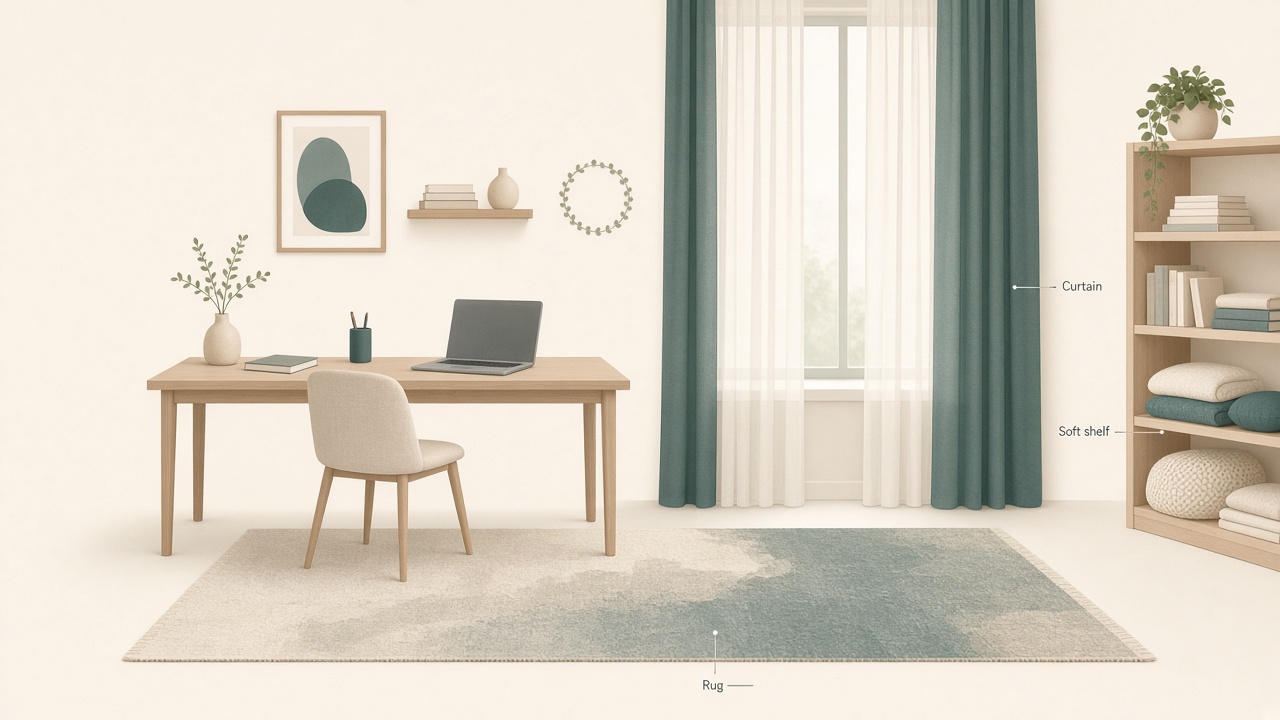
Soft surfaces that calm echo without renovation.
Diagnose the noise you actually have
Before buying foam panels you may regret, separate the problem types. Echo or brightness in your room shows up when claps sound sparkly and video calls feel hollow. Intrusion from hallway or street arrives as intermittent spikes you cannot fully eliminate. Household crossover is television, kitchen noise, and roommates bleeding through open paths. Structure noise is thumps through floor or ceiling that soft furnishings barely touch.
Cheap acoustic fixes shine on echo and household crossover. They help a little on street intrusion. They barely touch structure noise. If your main pain is a neighbor’s bass at midnight, prioritize headphones and schedule design over decorative panels.
Do a quick clap test in the middle of the room and near the desk. A long ring means too many hard parallel surfaces. A short dull thud means you already have absorption and may only need placement tweaks.
Soft surfaces that renters can actually use
Start with items that also serve daily life so the room does not fill with obvious studio cosplay.
A dense rug under and slightly in front of the desk reduces floor reflections and chair-scrape noise. A thin decorative mat does less. If you have laminate or tile, a rug with pad is often the highest-value single change. Curtains with some weight reduce glass slap and street edge during calls, even if you keep daylight most of the day. Floor-length panels help more than cafe-length ones; lined cotton or blackout panels are enough for many rooms.
Upholstered furniture in the reflection path softens flutter echo better than another hard shelf of empty bins. A bookshelf with mixed irregular books, a fabric chair, or a filled wardrobe all help. A simple draft stopper or rolled towel at the bottom door gap reduces hallway chatter more than people expect. Closing the door remains step zero.
Avoid adhesive acoustic foam on painted walls if your lease cares about damage. Prefer freestanding solutions and tension rods.
Placement beats product
Where the desk sits changes what you hear and what your microphone hears. Pulling the desk a bit off a hard corner can reduce boominess. Facing a soft zone such as curtains or a wardrobe often sounds better on calls than facing a blank wall with a window blasting reflections back into the mic. Putting the mic farther from the keyboard and nearer soft surfaces reduces clack and room sheen. Creating a soft backline behind you—curtain, hanging quilt on a freestanding rack, or tall bookshelf—improves how you sound to others without treating the whole apartment.
If you cannot move the desk, move softness toward you. A rug island, a curtain on a tension rod behind the monitor wall, and a fabric pinboard for notes can form a local quiet pocket.
Build a call corner without renovating
Video calls amplify acoustic flaws because headphones change how you hear your own room and compression makes reflections nastier.
A rental-friendly call corner kit includes a rug under the chair path, a curtain closed behind or beside you during important calls, a soft pinboard or fabric hanging within a couple of feet of the mic path, a fully closed door, and bathroom fans or kitchen hoods switched off when they add hiss. Keep a consistent mic position so you are not chasing gain between meetings.
Test with a one-minute recording. Listen for slap on consonants and for fan noise. Adjust distance before buying another USB microphone. Many “bad mic” problems are untreated rooms plus gain set too high.
Household agreements that soft furnishings cannot replace
Absorption will not stop a blender. For shared apartments, combine physical fixes with simple social ones. Post quiet hours on a shared note rather than renegotiating daily. Use a visible on-a-call sign that is boring and clear. Batch noisy chores outside deep-work blocks when possible. Offer reciprocity by scheduling your own vacuum time too.
Acoustic comfort is partly etiquette. Soft materials buy margin; they do not create silence in a home with several adults and a dog.
What not to waste money on first
Covering every wall with thin foam tiles does little below mid frequencies for many rooms. Fake soundproofing blankets that are only marketed moving blankets rarely justify the cost. Sealing vents in ways that hurt airflow can annoy both comfort and leases. Massive bass traps are the wrong first purchase when the real problem is keyboard noise and echo.
Spend first on rug, curtain, door gap, and desk placement. Reassess after a week of real workdays. Only then consider a freestanding absorber or a better cardioid microphone.
A weekend sequence that stays reversible
Saturday morning can cover diagnosis and the first soft layers in sixty to ninety minutes. Run the clap test and note the brightest corners. Lay a rug and pad under the desk zone. Hang or close heavier curtains on the noisiest glass. Add a draft stopper. Record a call sample.
Saturday afternoon is for refinement. Shift the desk ten to twenty centimeters if corner boom remains. Add one soft vertical surface behind or beside the mic. Cable-manage so the new soft items do not become trip hazards.
Sunday is for proof. Work a two-hour focus block and one real call. Keep only the changes you can feel, and return the rest. Reversible beats impressive. Landlords and future-you both prefer that.
Checklist
- Echo distinguished from intrusion, household crossover, and structure noise
- Desk zone covered with a dense rug, plus pad on hard floors
- Window reflections softened with curtains during calls
- Door closes fully; bottom gap reduced
- Soft surface placed near the mic path
- Desk moved out of the brightest hard corner when possible
- Household quiet cues defined for call blocks
- Changes retested with a recording
FAQ
Will rugs and curtains soundproof my apartment?
No. They absorb some reflections and lightly reduce certain noise paths. They do not block neighbors the way added mass and sealed walls would. Expect clearer calls and less harshness, not silence.
Are acoustic panels worth it in a rental?
Sometimes, after basics. Freestanding or tension-mounted panels can help a call corner. Adhesive wall grids are easy to regret. Start with dual-purpose soft furnishings.
My chair wheels are louder than the street. What helps?
A rug helps. So do quieter casters or a chair mat designed for your floor type. Wheel noise is often a top focus leak that people mislabel as neighbor noise.
Do plants help acoustics?
A little, if they are dense and leafy, but they are not a primary acoustic strategy. Use plants for morale; use textiles for sound.
What if I cannot close the door?
Build a softer desk pocket with a rug, curtains, and a tall bookshelf as a partial barrier. Use headphones with a gentle amount of consistent ambient sound if total quiet is impossible. Schedule the hardest thinking for the quietest household hours.