Article
Do you need an anti-fatigue mat for a standing desk?
An anti-fatigue mat will not repair a standing schedule that asks you to stand for hours without rest. It can, however, make short and planned stand blocks more comfortable on hard floors. This guide explains what a mat actually changes, when a purchase is worth the money, and which free adjustments to try first. The focus is workstation comfort and schedule design—not medical treatment for pain or injury.
Most people buy a mat after their first week at a standing desk, when feet feel tired and the floor suddenly feels like concrete. That impulse is understandable. The better sequence is to fix rotation and footwear first, then add a mat only if short stands still feel unnecessarily harsh.
At a glance
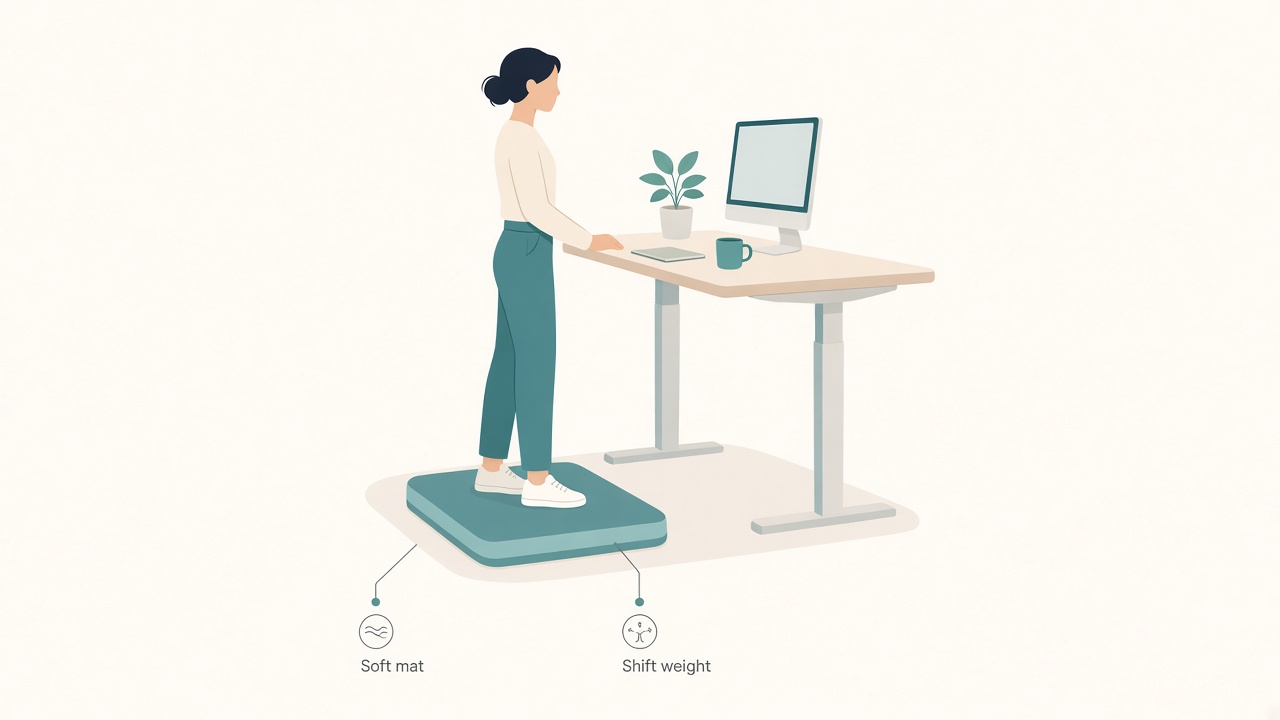
Soft mat underfoot for short standing blocks.
What a mat actually changes
A typical anti-fatigue mat softens pressure under the heels and invites small weight shifts from side to side. Those micro-movements reduce the static load that builds when you stand still on tile or thin carpet over concrete. The benefit is most noticeable during stand blocks of about ten to thirty minutes.
A mat does not convert motionless multi-hour standing into a comfortable default. If your plan still assumes long static stands, the mat becomes a comfort accessory on top of a weak routine. Pair any mat with a sane sit/stand rotation, such as the pattern you can build with the standing desk schedule builder.
Think of the mat as a surface upgrade for an already reasonable schedule. It is not a substitute for sitting, walking, or changing posture on purpose.
When a mat is worth buying
A purchase makes sense when three conditions line up. First, the floor under the desk is hard: tile, wood, or thin carpet over a rigid subfloor. Soft thick carpet already provides some give, so a mat adds less value there. Second, you already stand in short blocks and finish those blocks with general foot tiredness rather than sharp joint pain. Mild tiredness that fades after you sit is a common adaptation signal when standing work is new. Third, the mat stays flat and does not become a trip edge when you sit and roll the chair forward.
Mats also help people who share a desk zone with a sit/stand converter on a hard kitchen or dining surface. In those setups, the standing footprint is small and the floor is rarely designed for long upright work. A compact mat under that footprint can make the converter feel less punishing without rearranging the whole room.
If those conditions are missing, delay the purchase. Money spent on a mat while the chair is unusable or the schedule is chaotic rarely improves the day.
When to skip or delay the purchase
Skip the mat if you are standing for hours mainly because the chair is uncomfortable. In that case the mat rewards the wrong workaround. Fix the seated setup or the rotation first. Delay the mat if thick gel versions make your stance feel unstable or if the surface rolls underfoot when you shift weight. Unstable foam trains bracing rather than relaxed standing.
Also delay if you work barefoot on a slick floor and the mat slides when you move. A sliding mat is a safety problem before it is a comfort tool. Choose a mat with a reliable non-slip base, or wear supportive shoes and reassess. Finally, avoid oversized mats that spill into walkways in small apartments; a mat that catches chair casters or door arcs creates more friction than relief.
Comfort signals versus warning signals
Mild foot tiredness that fades after sitting can be a normal response when you are new to standing work blocks. That signal often improves as you shorten stands, add weight shifts, and use better shoes. Numbness, tingling that worsens while standing, or sharp knee or hip pain is a different category. Sit down, shorten or pause standing blocks, and change the plan rather than “pushing through” with a thicker mat.
A thicker mat cannot diagnose a setup problem. If discomfort increases as soon as you stand, check desk height, shoe support, and whether you lock your knees. If discomfort is localized and sharp, treat that as a stop cue for self-experimentation and seek professional guidance if it persists. Educational desk advice stops at geometry and schedule; it does not replace clinical evaluation.
Cheaper alternatives to try first
Supportive shoes often outperform a mat on hard tile, especially if you have been standing in socks. Shorter stand blocks with more frequent switches reduce load more reliably than any foam layer. A slight weight shift every few minutes—heel to toe, left to right—keeps the stance from freezing. A folded exercise mat can serve as a temporary test only if it stays put and does not compress into a soft mound that twists the ankle.
You can also move the standing footprint onto a denser rug already in the room, provided the rug does not bunch underfoot. Test for ten-minute blocks across two workdays before spending. If these free changes remove most of the complaint, keep the money for a better chair, monitor arm, or other upgrade that addresses a clearer gap.
How to choose a mat if you still want one
Prefer a low-to-medium thickness mat with a flat standing zone rather than aggressive massage bumps that force an unnatural gait. The surface should allow small shifts without catching the edge of your shoe. A beveled edge reduces trip risk when you sit and roll. Size should cover your natural stance width with a little margin, not the entire room.
Check whether the mat smells strongly out of the box and whether the base marks wood floors; both are practical apartment concerns. If you use a rolling chair at the same desk, confirm the mat does not fight the chair’s path when you sit. Some people keep the mat slightly offline when seated and nudge it back for stand blocks; that habit only works if the mat is light enough to move safely.
Pair the mat with a standing schedule
The mat works best inside a written rotation. A common pattern is seated deep work, a short stand for email or calls, then a walk or sit reset. Standing all afternoon on a premium mat still concentrates load in the feet and back. Use the mat during the stand portion only, and treat sit time as part of the same system.
If you are new to standing desks, start with shorter stands than marketing photos suggest. Ten to twenty minutes, a few times per day, teaches the routine without demanding endurance. Increase duration only when you can finish a block without bracing or locking the knees. The schedule builder linked above helps turn that intention into timed blocks you can repeat.
A simple two-week trial plan
Week one focuses on schedule and shoes without a new mat. Note when feet feel tired and whether tiredness tracks with long static stands. Week two introduces a mat only if hard-floor discomfort remains after shorter blocks. Compare the same tasks with and without the mat for three days.
Keep the mat if short stands feel easier and you do not trip, slide, or brace. Return or stop using it if stance feels unstable, if you start standing longer solely because the mat feels “worth using,” or if discomfort shifts into sharp joint pain. The trial question is comfort during planned blocks, not whether you can stand longer than before.
Checklist
- Standing schedule uses short blocks, not all-day static stands
- Supportive shoes tested before buying a mat
- Floor type assessed (hard floor benefits more than thick carpet)
- Mat stays flat with a non-slip base and safe edges
- Stance remains stable during small weight shifts
- Chair path still works when you sit and roll
- Mild tiredness distinguished from numbness or sharp pain
- Desk height rechecked so wrists and shoulders stay comfortable while standing
- Two-week trial notes kept for keep-or-return decision
FAQ
Will a mat fix sore feet from standing all day?
Usually not by itself. All-day static standing is the core problem. Shorten blocks, add sits and walks, then use a mat as optional comfort on hard floors.
How thick should an anti-fatigue mat be?
Medium thickness with a stable feel beats a very thick gel layer that rolls underfoot. Stability and edge safety matter more than maximum cushion depth.
Can I stand barefoot on the mat?
Some people prefer it. If the mat slides or your feet ache, wear supportive shoes and reassess. Barefoot standing on a slick base is a poor trade for soft foam.
Is a yoga mat a good substitute?
Only as a short test, and only if it does not bunch or compress unevenly. Most yoga mats are thinner and less stable for desk standing than a purpose-built anti-fatigue mat.
Do I need a mat if I already have thick carpet?
Often no. Try schedule changes and shoes first. Add a mat only if a specific hard patch under the desk still bothers you during short stands.
Related tools: standing desk schedule