Article
How to manage afternoon energy crashes at a desk job
The afternoon crash at a desk job rarely arrives as dramatic fatigue. It shows up as rereading the same paragraph, opening a new tab without a reason, and deciding that planning counts as progress. This guide is educational and practical—not medical advice. If you have ongoing concerns about sleep, energy, or attention, talk with a qualified professional. What follows is a workstation and workflow playbook for ordinary post-lunch slumps.
Most people try to fix the crash with more caffeine. That sometimes works for a short stretch and then leaves you jittery while dim light, static posture, heavy meals, and poorly sequenced tasks keep running in the background. Treat the crash as a system you can tune, not as a character flaw.
At a glance
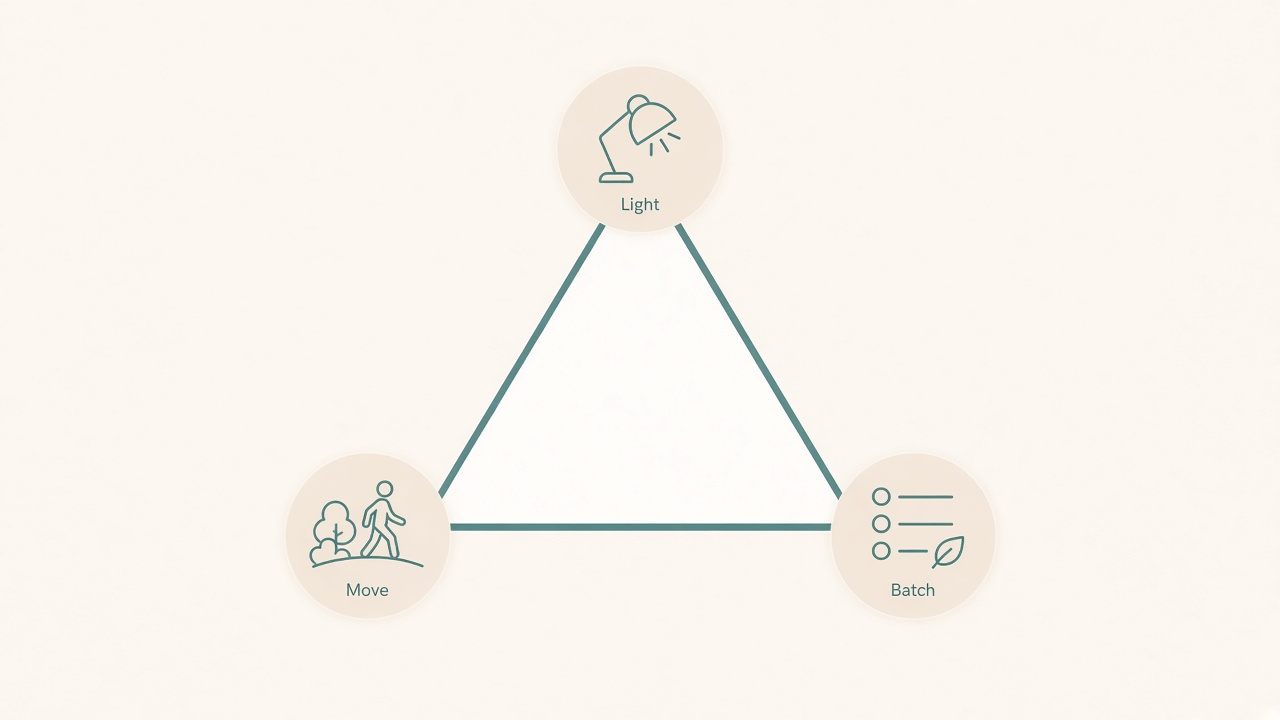
Quick afternoon reset: light, movement, and task batching.
Map when the crash actually starts
Spend three ordinary workdays noting the time you first feel the dip. Use a sticky note or a one-line calendar event. Patterns matter more than intensity ratings.
Common shapes appear across desk jobs. A food-heavy dip often lands between about 12:45 and 1:30 after a large lunch. A light-and-posture dip often lands between 2:00 and 3:00, when screen brightness stays high while the room darkens. A decision-fatigue dip often lands between 3:30 and 4:15 after a morning of meetings and inbox triage.
Once you know the window, protect the thirty minutes before it. Prevention is easier than recovery. If your dip is clockwork at 2:15, start a light reset at 1:50 instead of waiting until attention is already fragmented.
Fix the room before you fix your willpower
Afternoon rooms often become visually dull: blinds half-closed, overhead lights off, only the monitor glowing. That contrast makes your eyes work harder and makes the desk feel cave-like.
Run a two-minute environment reset. Open blinds or raise shade height so you get side daylight when available. Turn on a desk lamp aimed at the desk surface—not into your eyes and not bouncing hard off a glossy screen. Lower screen brightness one notch so it roughly matches the room. Clear cups, packaging, and leftover meeting notes from the primary sightline.
You are not decorating. You are reducing sensory conditions that make the crash feel deeper than it needs to be.
Use movement snacks, not heroic workouts
Long sits reduce comfort in the back and hips just enough to steal attention. You do not need a gym session between messages. You need short, boring movement that is easy to start.
Pick one snack every 45–60 minutes in the afternoon. Stand and fill a water bottle, then remain standing for the next email batch. Walk to a window and look at something farther than your screen for sixty seconds. Do two slow shoulder rolls and a gentle neck turn left and right without forcing range. Take a three-minute hallway loop if you can leave the room.
If you have a sit/stand desk, schedule a short stand block in the crash window rather than standing all day. A gentle rotation often works better than an all-or-nothing posture rule. Use a structured plan with the standing desk schedule builder if you want timers without guesswork.
Keep snacks non-negotiable and tiny. If a break requires shoes, a change of clothes, or a perfect playlist, you will skip it when the calendar gets noisy.
Redesign lunch so it does not own 2 p.m.
Food timing and composition are personal, but desk workers often make the same afternoon-hostile choices: a very large meal, almost no water earlier, then a sugary “reward” while still sitting.
Practical, non-medical guidelines many people find helpful start with a moderate lunch you can finish without feeling stuffed. Include some protein and fiber so the meal is not only refined carbohydrates. Drink water before and after lunch, not only coffee. Take a short walk after eating if your schedule allows; even five minutes helps many people feel less foggy.
If workplace culture pressures long restaurant lunches, reclaim the return. A ten-minute outdoor loop before you open the laptop again is often more valuable than starting chat in the elevator.
Batch the right work into the crash window
Willpower is a weak tool against a predictable dip. Task design is stronger. Put low-stakes, structured work into the crash window and protect higher-stakes thinking for sharper hours.
Good crash-window work includes inbox triage with a timer, file naming, status updates, calendar cleanup, formatting, light editing, checklist completion, and routine messages that do not require delicate wording. Bad crash-window work includes architecture decisions, sensitive feedback, first drafts of high-stakes documents, and anything that requires holding several constraints in working memory at once.
Create a standing afternoon batch list each morning with three to five items. When the dip hits, execute the list instead of inventing priorities while depleted. That habit alone prevents a large amount of tab thrashing.
A sample 1:00–4:00 playbook
Adapt this sequence; do not treat it as fixed doctrine. At 1:00, return from lunch, drink water, open blinds or a lamp, and match screen brightness to the room. At 1:10, finish one small open loop from the morning in five to ten minutes. At 1:20, take the first movement snack and stand for an admin batch. At 1:50, run a pre-crash reset with posture, water, and shoulder mobility. At 2:00, work the crash-window batch list under a 25–35 minute timer. At 2:35, walk or take a hallway loop. At 2:45, attempt one focused creative or analysis block if energy returned; otherwise continue structured work. At 3:30, use a second batch or meeting prep only, and avoid starting a new deep project.
Notice what this plan does not demand. It does not require peak originality at 2:10. It assumes the dip and designs around it.
Mistakes that keep the crash sticky
Chasing alertness with endless caffeine after lunch can disrupt evening wind-down and deepen the next day’s crash. Lying down for five minutes on the couch can become an unplanned forty-minute collapse. Doomscrolling as recovery taxes attention instead of restoring it. Scheduling your hardest meeting inside the known dip without a buffer removes your best prevention window. Skipping lunch entirely and white-knuckling through shakiness is not discipline; it is another unstable system.
If you work remotely, also watch false recovery through household chores mid-afternoon. Washing a few dishes can be a legitimate movement snack. Deep-cleaning the fridge usually becomes avoidance dressed as productivity.
Checklist
- Usual dip window identified from recent notes
- Room light on and screen brightness roughly matched to the room
- Water within reach; post-lunch caffeine capped if it wrecks evenings
- Lunch kept moderate; short post-meal walk taken when possible
- Movement snack completed before the dip, not only after
- Afternoon batch list prepared with structured, low-stakes tasks
- Hard thinking scheduled outside the worst crash hour
- Phone kept out of the default recovery role
FAQ
Is the afternoon crash always about lunch?
No. Lunch size matters for many people, but light quality, static sitting, meeting load, sleep debt, and task mismatch often contribute. Treat lunch as one lever among several, not the only story.
Should I take a nap?
Some people benefit from a short planned nap; others wake groggy and lose the rest of the day. This article does not prescribe napping. If you experiment, keep it short, timed, and intentional—not an accidental couch collapse during a break.
What if my job is meetings from 1 to 5?
Shift the playbook to micro-resets between calls: stand for one meeting, sit for the next, drink water between sessions, and take a two-minute walk after the heaviest block. Protect a small batch list for gaps so residual minutes do not dissolve into chat.
Can standing all afternoon fix the crash?
Usually not. Standing without breaks can create its own fatigue. Short stand blocks and movement snacks tend to work better than an endurance contest. Adjust height so wrists and shoulders stay comfortable; guesswork here creates new problems.
How long before I know if this is working?
Give a consistent protocol five workdays. Track dip start time and whether you completed the batch list. If nothing changes after real consistency, look next at sleep timing and workload design as practical habits, and seek professional help if energy issues persist.
Related tools: standing desk schedule